
How To Measure Glass
Accurate measurements are the most important part of ordering decorative glass. Most of our glass is toughened, and toughened glass cannot be cut down once it has been made, so a size that is too large cannot be corrected. This guide explains how to measure single glazed glass and double glazed units in wooden and PVCu doors and windows. Ten minutes spent reading it will help your order run smoothly.
For larger orders we can visit to measure, but for most orders the cost of a site visit outweighs the value of the glass.
The three sizes
When you order, we need two sizes from you: the glass size and the visible size. You will measure a third size, the tight size, to work out the glass size – but please do not send it to us as the glass size.
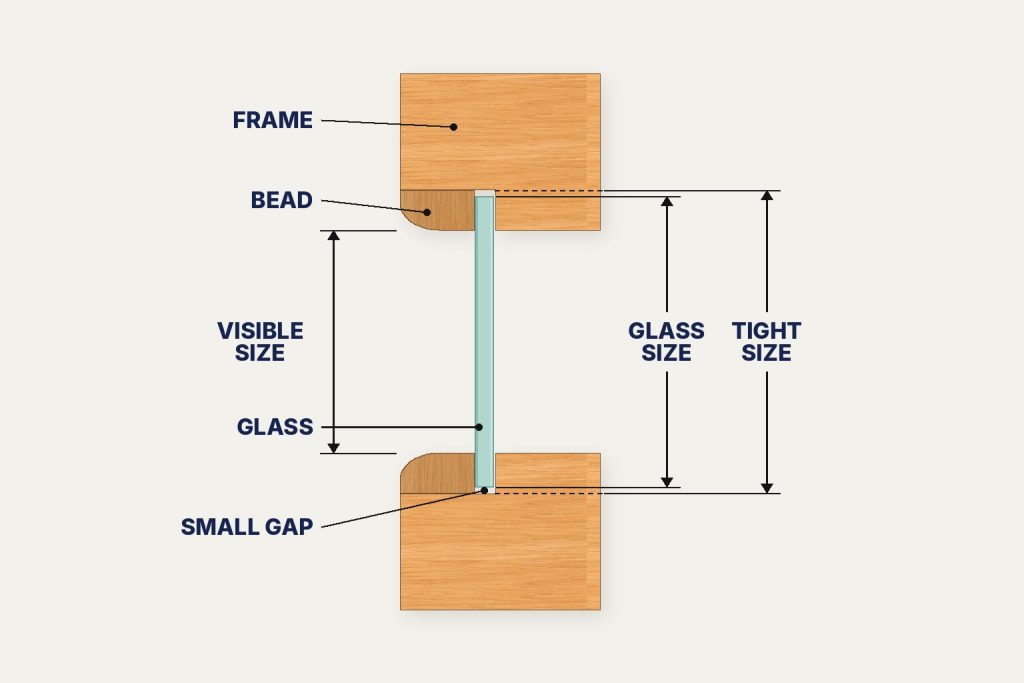
Tight size
The tight size is the full size of the opening the glass sits in, measured from the edge of the rebate on one side to the edge of the rebate on the other. Glass ordered at this size would be a struggle to fit, and may not fit at all.
Glass size
The glass size is the tight size with a small amount taken off the width and the height, so the glass drops into place easily. Toughened glass can be produced up to 2 mm larger or smaller than ordered, which is the industry standard, and frames are rarely perfectly square. The allowance covers both. On our order form this is Glass Required Width and Glass Required Height.
Visible size
The visible size is the area of glass you can actually see once it is fitted, between the inside edges of the beading. If your design has a border, or detail close to the edge, we use the visible size to keep it clear of the beading. Some doors have wide beading that would otherwise hide part of the design.
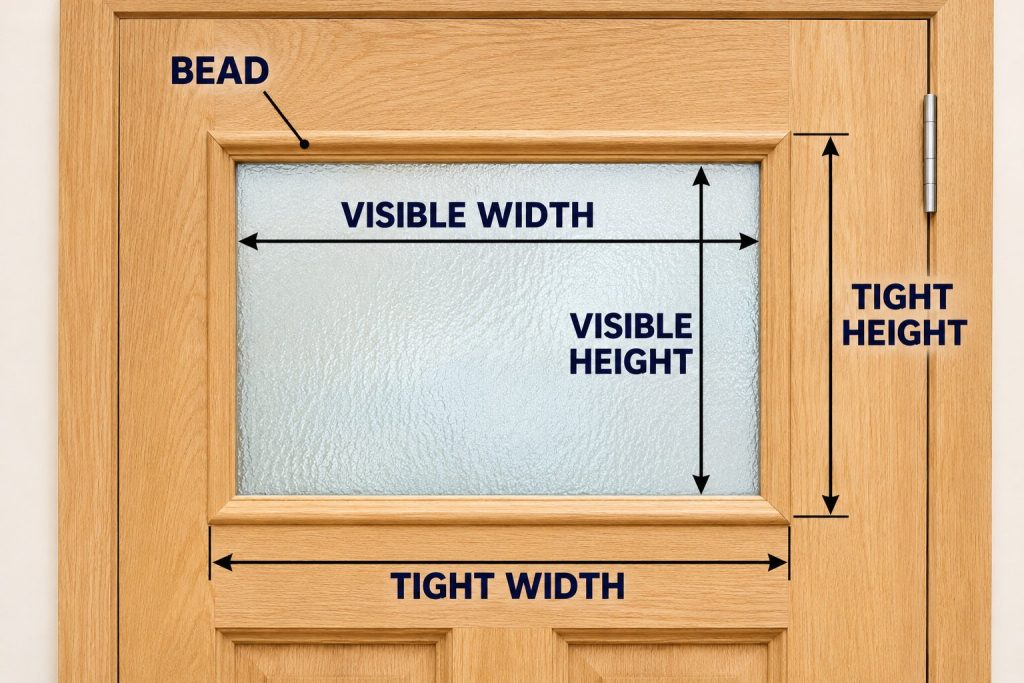
Glass sizes are always written width × height.
If your glass is not rectangular or square, follow our guide to making a template for shaped glass.
Measuring single glazed glass
First find where the beading meets the frame. On an external door this is usually on the inside face of the door. In the photo below, the arrows A, B and C point to where the beading starts.
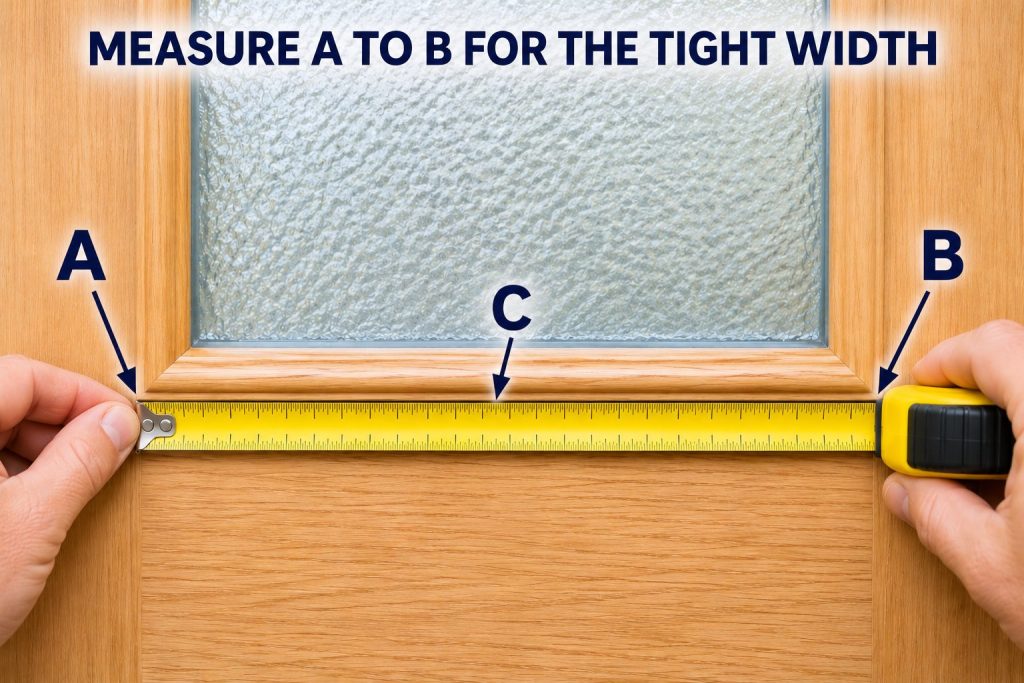
- Measure from A to B for the tight width – in this example, 615 mm.
- Measure from C to D for the tight height. D is the matching point at the top of the opening – in this example, 1023 mm.
- Take 5 mm off both measurements. This is the usual allowance for single glazed glass in a wooden frame.
The tight size is 615 × 1023 mm, so the glass size to order is 610 × 1018 mm.
Measuring double glazed units
The spacer bar
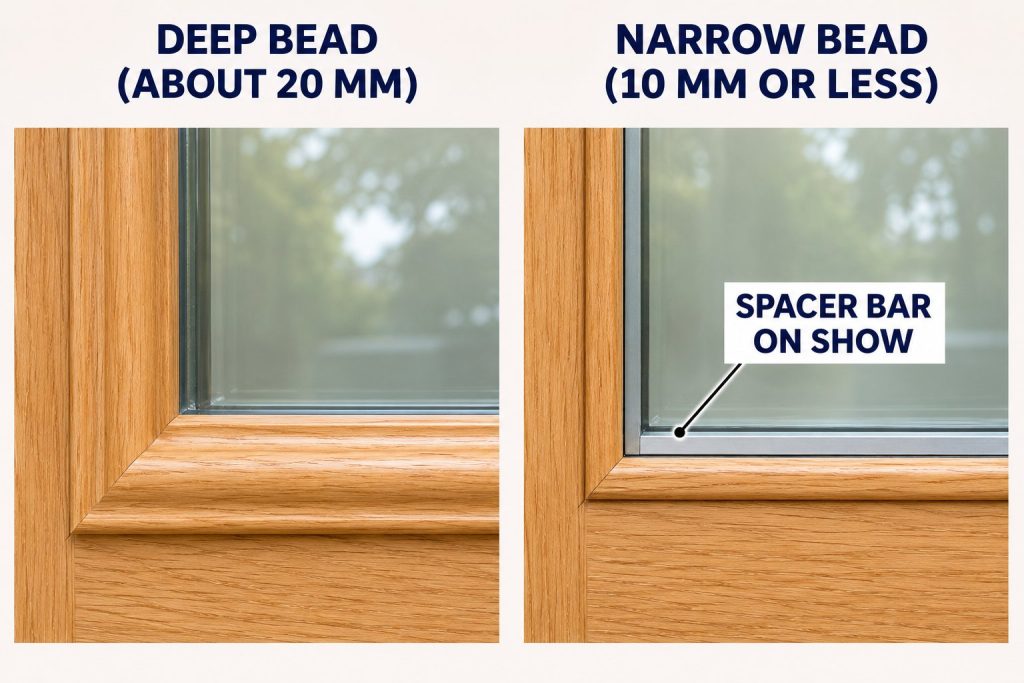
A double glazed unit has a metal or plastic spacer bar between its two panes, set around 13–14 mm in from the edge of the glass. Whether you see it once the unit is fitted depends on the depth of your beading. Beading around 20 mm deep hides it well; beading 10 mm deep or less leaves much of it on show. If you are having a new door made, ask for beading at least 20 mm deep. Our page on double glazed sealed units explains how the units are built.
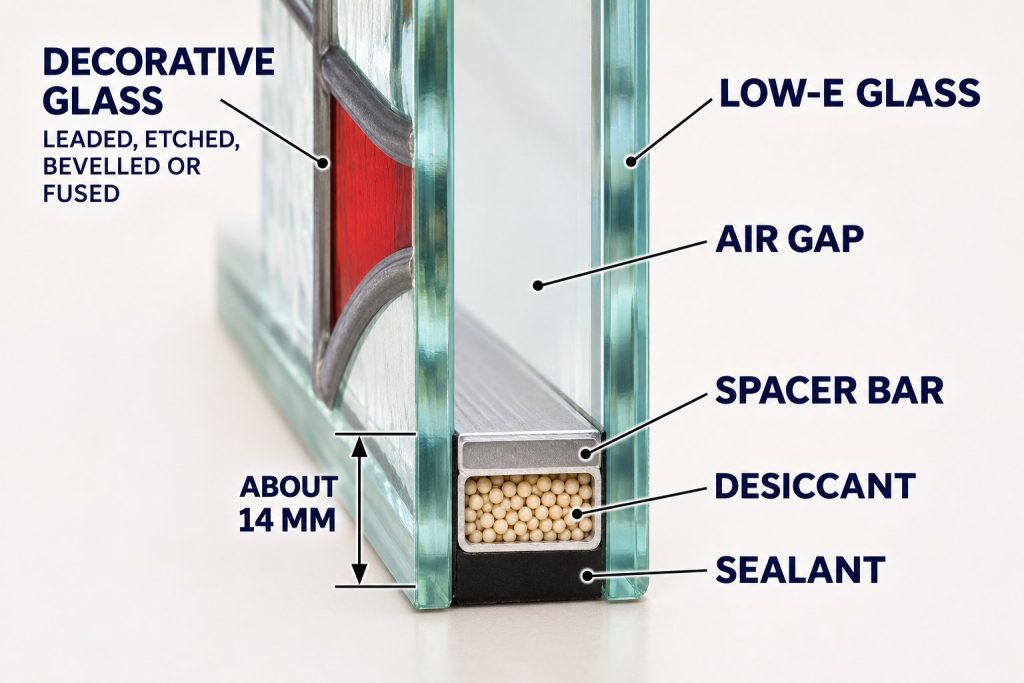
Double glazed units in PVCu frames
Find where the beading starts. On PVCu this is usually where the flat face of the frame ends and the profile starts to shape in towards the glass, often with a small visible gap where the bead clips in. PVCu frames are not always beaded on the inside, so check both sides.
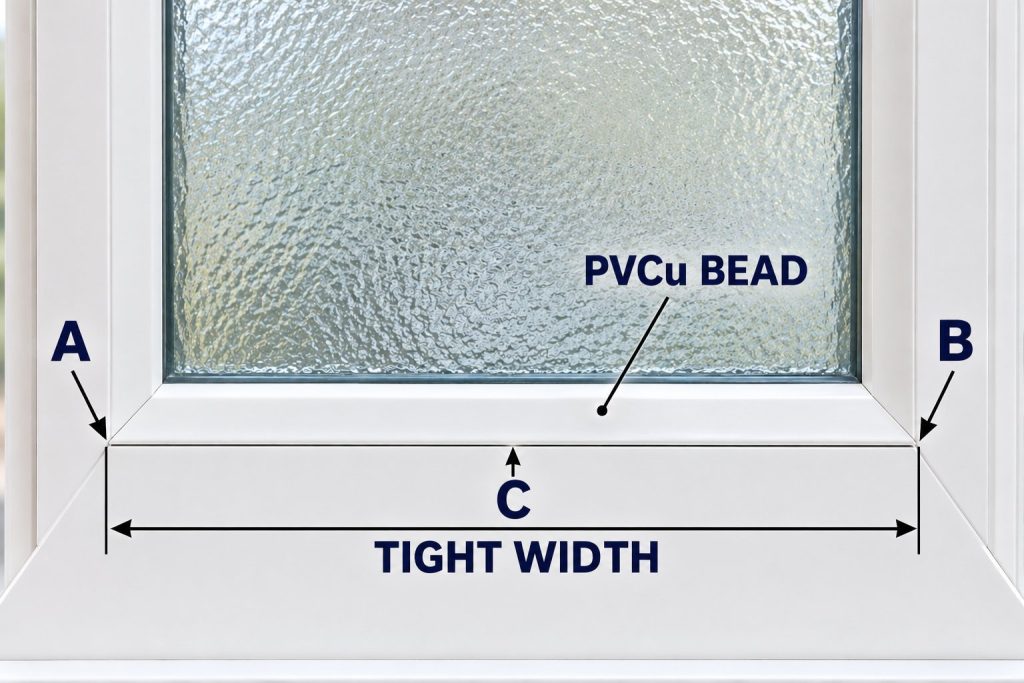
- Measure from A to B for the tight width – in this example, 455 mm.
- Measure from C to D for the tight height – in this example, 994 mm.
- Take 10 mm off both measurements. PVCu beading is normally deep enough to hide the spacer bar, so the larger allowance does no harm.
The tight size is 455 × 994 mm, so the glass size to order is 445 × 984 mm.
Double glazed units in wooden frames
Find the tight size in the same way. Wooden beading varies far more than PVCu, so the allowance depends on how deep your beading is:
- Beading around 20 mm deep: take off 10 mm, as for PVCu.
- Beading around 10 mm deep: the spacer bar will show whatever you do. Take off less – around 5 mm for a 14 mm unit – to keep as little of it on show as possible.
Some customers accept a visible spacer bar in return for the extra insulation of double glazing, particularly in older doors with slim beading. If you are unsure, send us a photo of the frame and we will advise.
Working out the thickness of a double glazed unit
Most units in PVCu frames are 24 mm or 28 mm thick. Units in wooden frames can be anything from 14 mm to 28 mm. If the frames are new, ask the supplier; for older frames the thickness may be on the original receipt or guarantee.
Otherwise you can work it out without removing the glass, using a tape measure and a straight edge such as a length of timber:
- Measure the full thickness of the frame or opener that holds the glass.
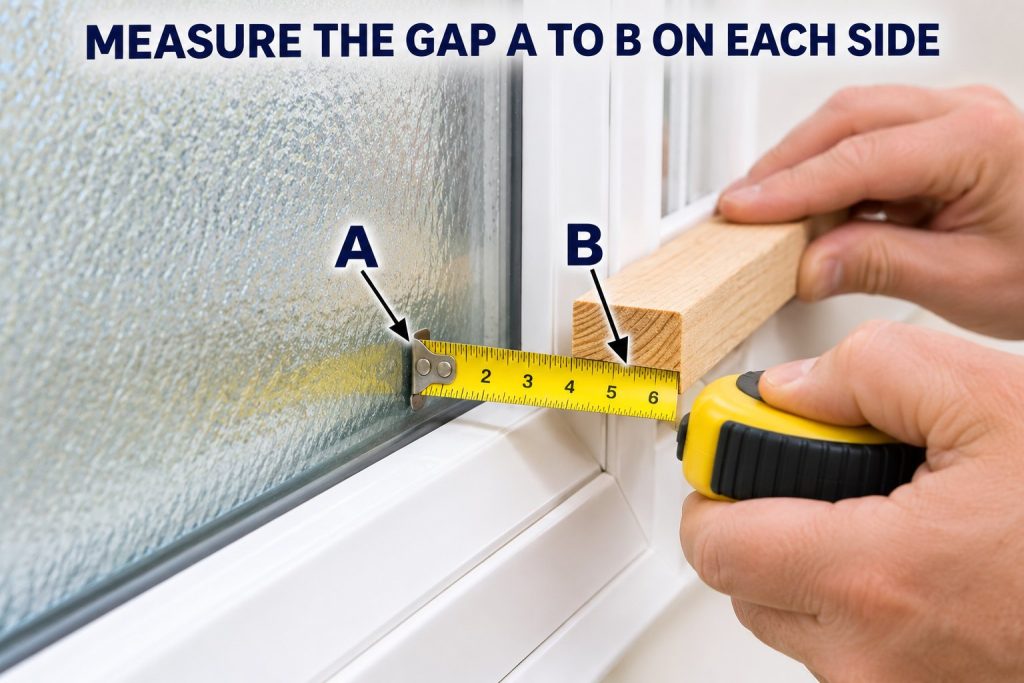
- Hold the straight edge flat against one face of the frame so it reaches across onto the glass. Because it rests on the frame, it will stand slightly away from the glass.
- Measure the gap between the glass and the straight edge (A to B).
- Repeat on the other side of the frame.
- Take both gaps away from the frame thickness. The result is the thickness of the unit.
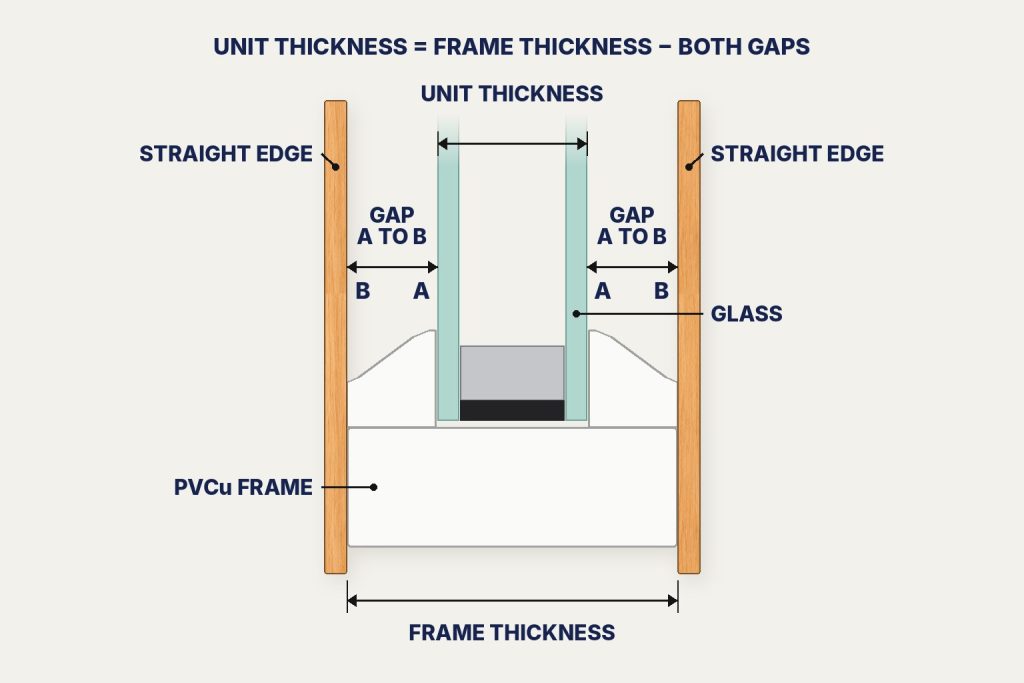
For example: a frame 62 mm thick with a 17 mm gap on each side gives 62 − 17 − 17 = 28 mm.
Related guides: How to install your glass and Safety Glass Regulations.
Disclaimer
The advice on this page is a general guide to measuring and installing glass panels. Leadbitter Glass does not accept responsibility for injury or loss, financial or otherwise, arising from following it. Measuring and fitting glass should only be carried out by a competent person with good DIY skills; if you are not confident, we recommend using a tradesperson. Leadbitter Glass does not accept responsibility for incorrect measurements. The only guaranteed way to obtain accurate glass sizes is from the window or door manufacturer at the time of purchase.